Engineering the Future
November 2026
This article originally appeared in the Cleveland Lutheran High School Association (CLHSA) Annual Report, published in November 2026.
What happens when there isn’t one right answer?
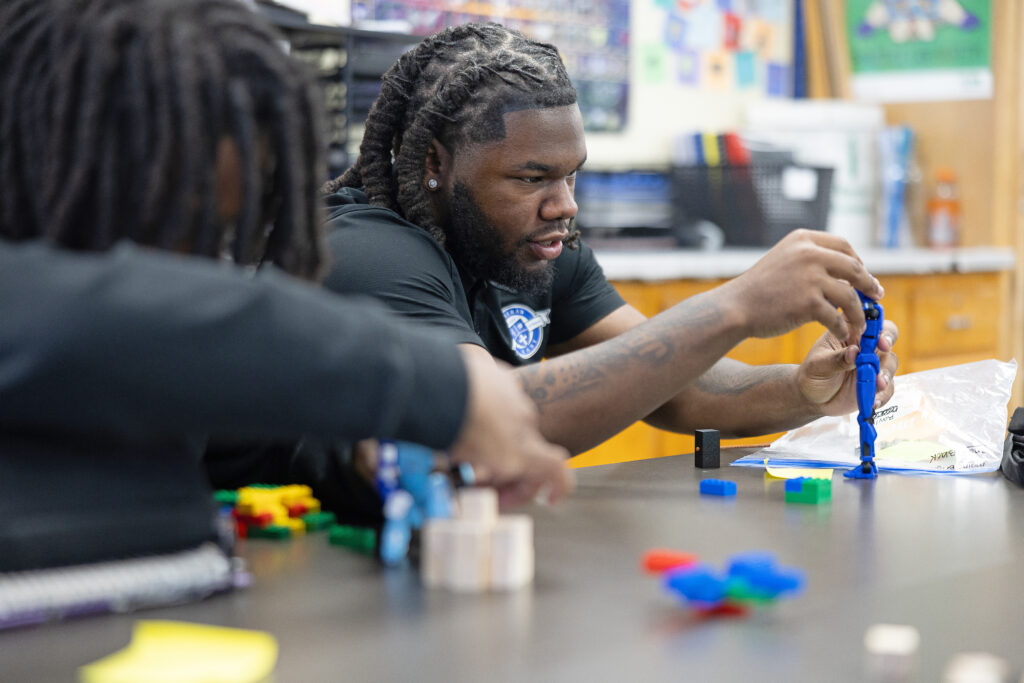
At Lutheran East, students in one of the school’s newest courses, Introduction to Engineering Design, are learning that some of the most rewarding problems are the ones without just one solution. Instead of being offered a formula or a step-by-step path to a predetermined answer, students are challenged to think critically, test ideas and hypotheses, make adjustments, and keep working until they design a solution that solves a problem. Along the way, they are developing more than engineering skills—they are learning how to approach complex problems with creativity, precision, and perseverance.
Now in its third year, Lutheran East’s engineering program began in the 2024–25 school year with this single course: Introduction to Engineering Design (IED). While the program is still young, its impact is already evident. Over the past two years, approximately half of the seniors who have taken the course have gone on to major in engineering or a closely related field.
“That’s rewarding for us to see,” says Matt Luecke, Head of School. “Not only are students interested in exploring the field of engineering as high school students, but they’re taking the next step to choose STEM fields as their focus for college and career. We’re excited to see what the future holds for these students, who were pioneers in our Engineering curriculum.”
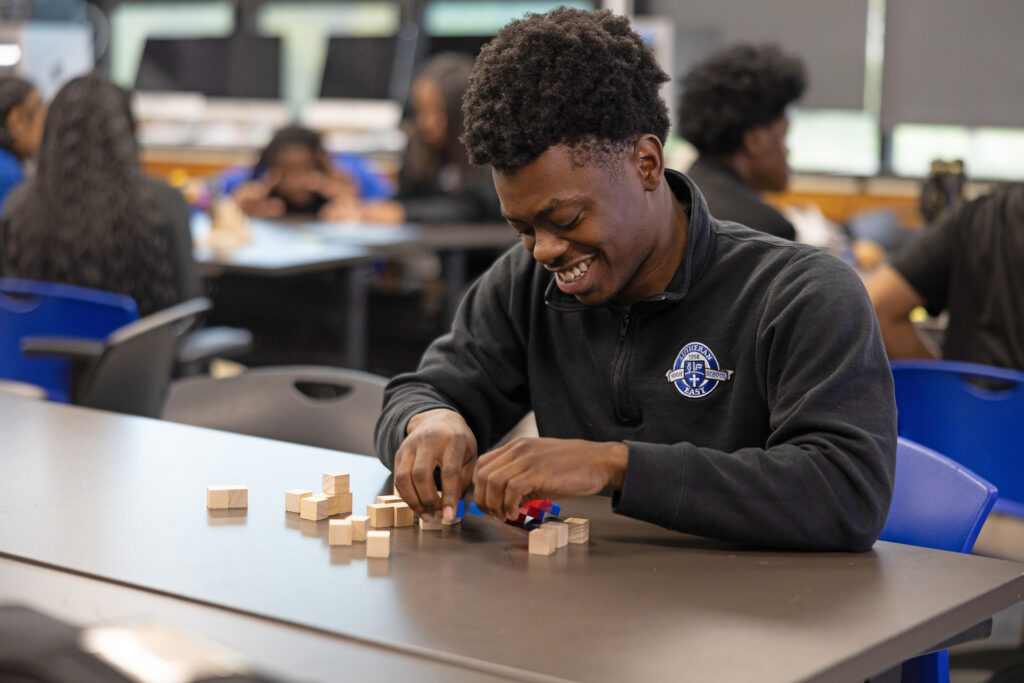
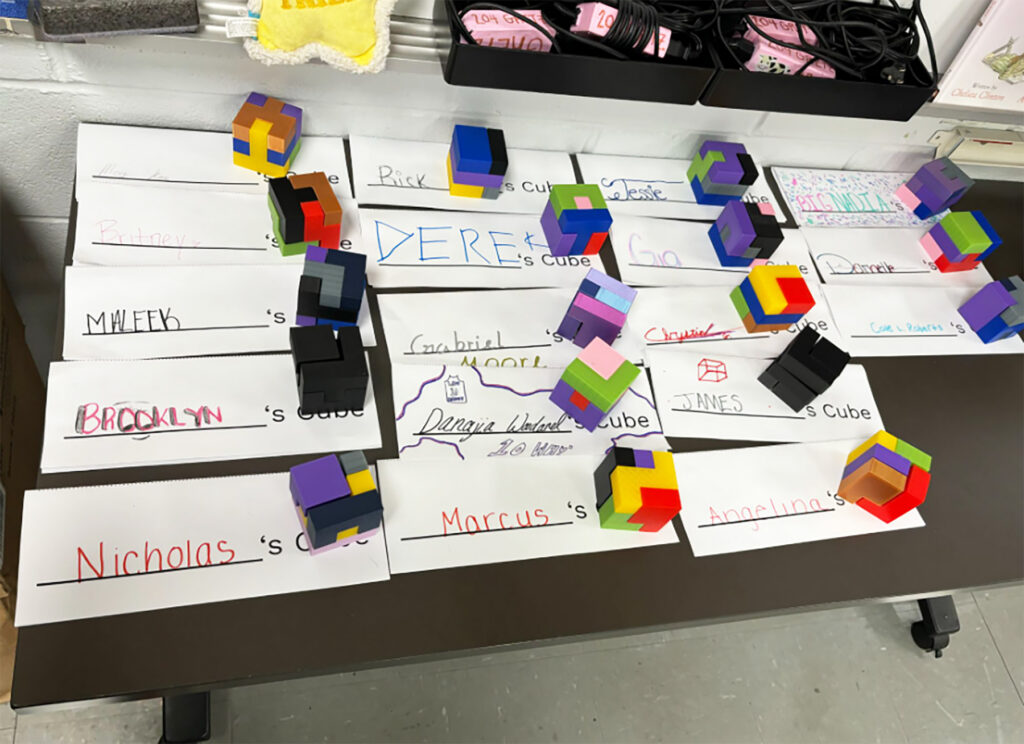
Students begin IED by learning to visualize objects in three dimensions. Using isometric paper, they practice translating their ideas into 3D drawings—a foundational skill that prepares them to bring those concepts to life using CAD (computer-aided design) software.
Throughout the year, students work through four primary units, each introducing new concepts and challenges:
— The Design Process and Problem Solving
— Complex CAD Functions
— Reverse Engineering and Precise Measuring
— Moving Multi-Part Objects.
The heart of the course, however, goes beyond software, technical drawings, or even engineering as a specific STEM discipline.
“Engineering is for everyone,” explains Ms. Grace Gretz, Lutheran East’s Engineering teacher. “In a world increasingly shaped by instant gratification, one of the most important skills students can develop is the ability to systematically go through the process of solving problems.”
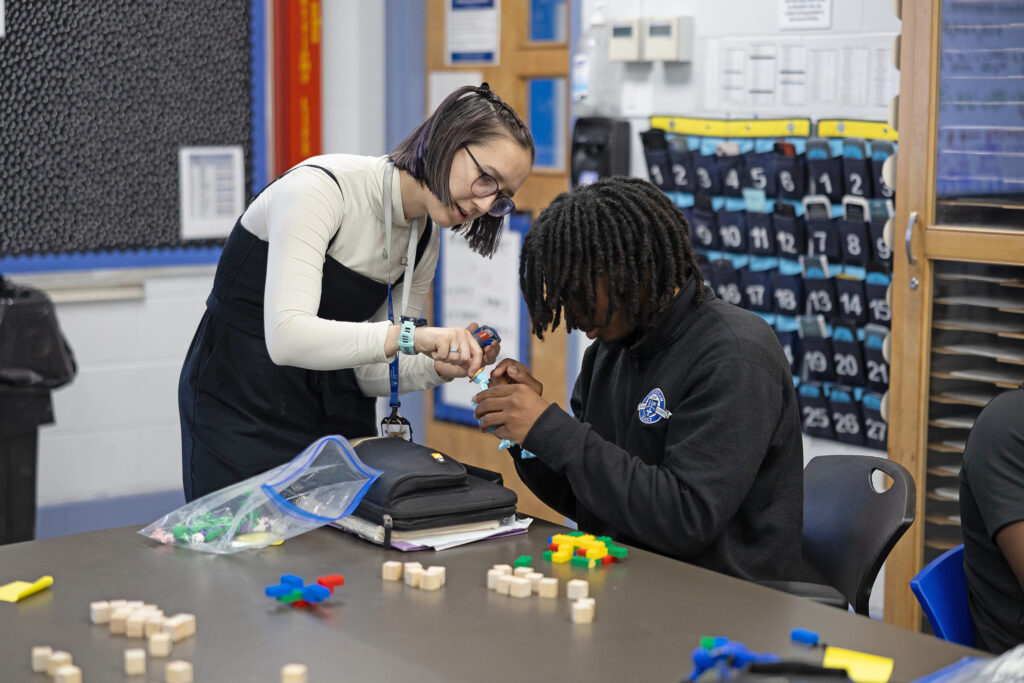
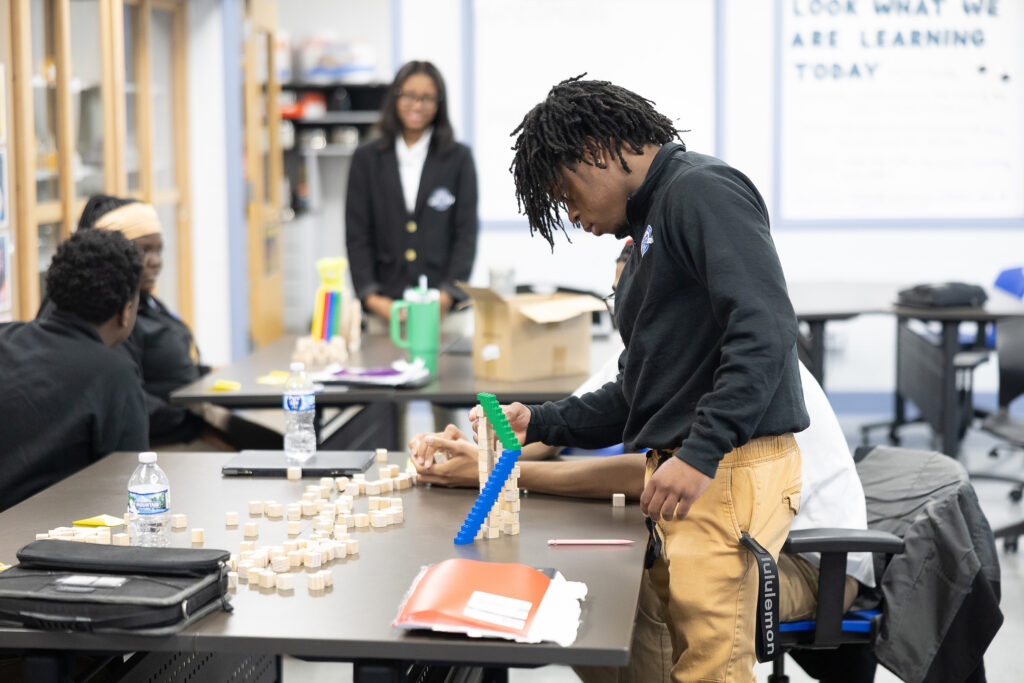
Students quickly discover that Engineering is about critically considering a real-world problem and developing a practical solution to address that program. When approaching problem-solving in this way, there isn’t always a single correct answer. They are challenged with large, complex problems and intentionally given limited instructional influence toward a specific outcome. The process can be frustrating. Students are challenged to think outside their comfort zones and, for many, it’s the first time they’ve been so fully charged with developing unique solutions.
But then comes the breakthrough.
When a student finally figures out how to make something work after struggling through the process, the resulting sense of accomplishment is difficult to replicate.
Kamyah Hunter ’28, current junior, says she welcomes the challenges she encounters in class. “I enjoy Engineering class most when I’m putting my mind to work, and working on something challenging.”
That persistence is becoming a defining part of the Lutheran East Engineering experience, and an element of character building that
students will carry with them beyond their time in the course.
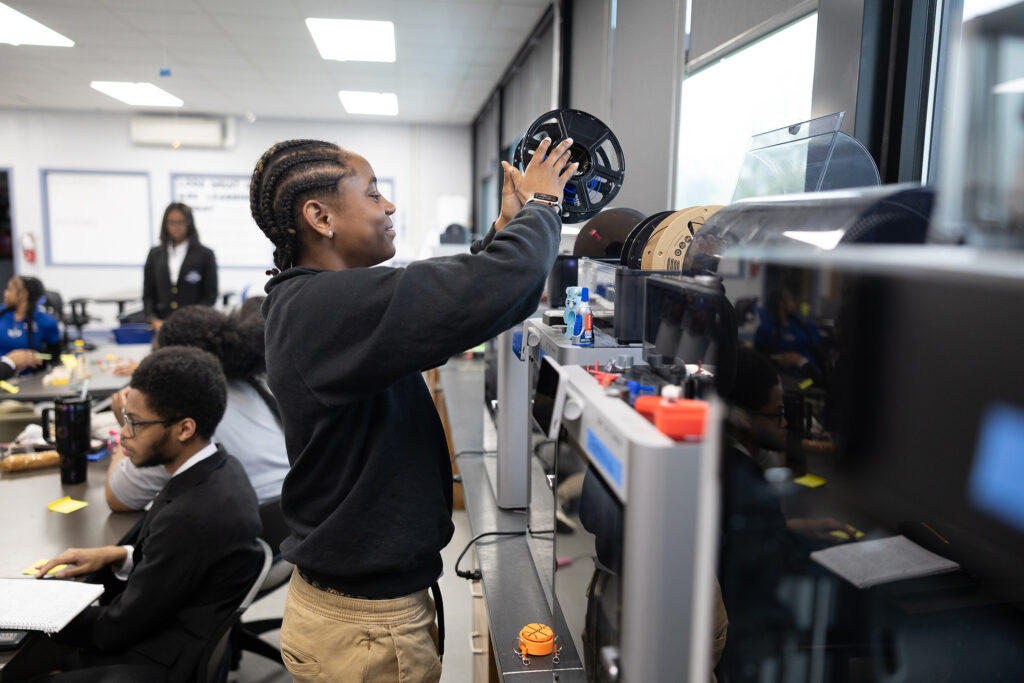
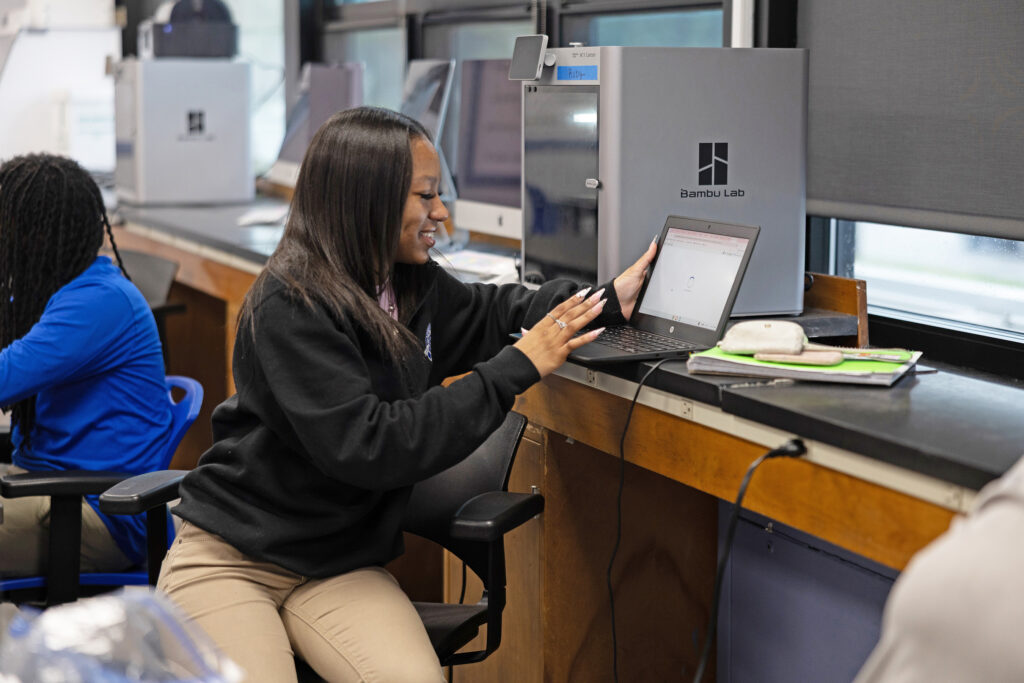
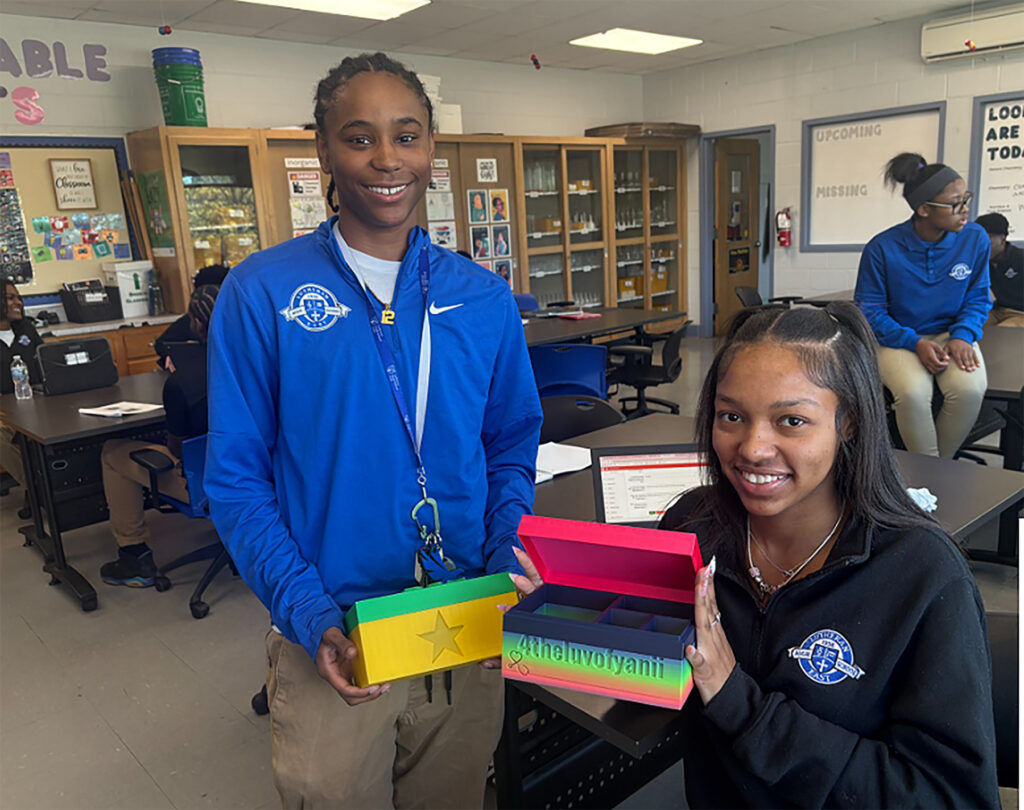
The program’s physical resources have grown right alongside its students. What began with two barely functioning 3D printers has expanded to eight Bambu Lab® 3D printers, dramatically increasing the program’s ability to turn student designs into tangible physical prototypes.
Students have also begun upgrading their own equipment and developing more efficient ways to work, from programming computer mice to perform specific commands to mastering keyboard shortcuts that accelerate their CAD skills.
The next phase of growth in the engineering curriculum will bring even more opportunities. Lutheran East hopes to expand beyond IED by adding an Engineering II or an Electrical Engineering course. The school also offers Computer Science and Physics STEM courses, creating additional opportunities for students to strengthen the technical and analytical skills that support engineering and prepare them for these ever-growing and evolving career fields.
But for Ms. Gretz, the goal is bigger than simply building a stronger engineering program.
“The hope is that engineering eventually becomes a required experience for every Lutheran East student—not because every student will become an engineer, but because every student can benefit from learning how to frame a complex problem and develop a solution that does not yet exist.”
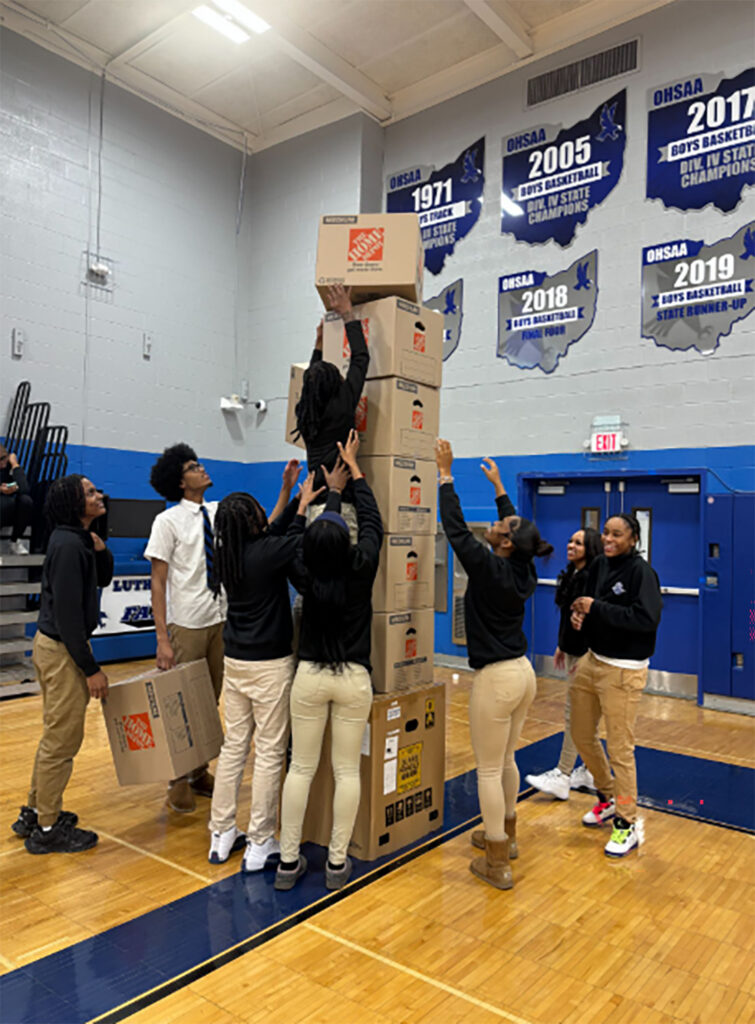
Senior Andy Gray ’27 shares that the ability to think critically to creatively solve problems is incredibly satisfying. He says, “The most enjoyable aspect of Engineering class is our design project competitions—they [ the competitions ] really make us think about how to do it, and this class requires us to bring out a level of creativity in ourselves that we don’t always have to in other classes.”
That mindset has the potential to follow students far beyond the classroom.
Whether they pursue engineering, computer science, physics or an entirely different field, Lutheran East students are learning to look at a challenge and ask a different question—not simply, “What is the right answer?” but “What could I create?”
And sometimes, the most valuable lesson is discovering that the answer isn’t there yet.
It has to be engineered.